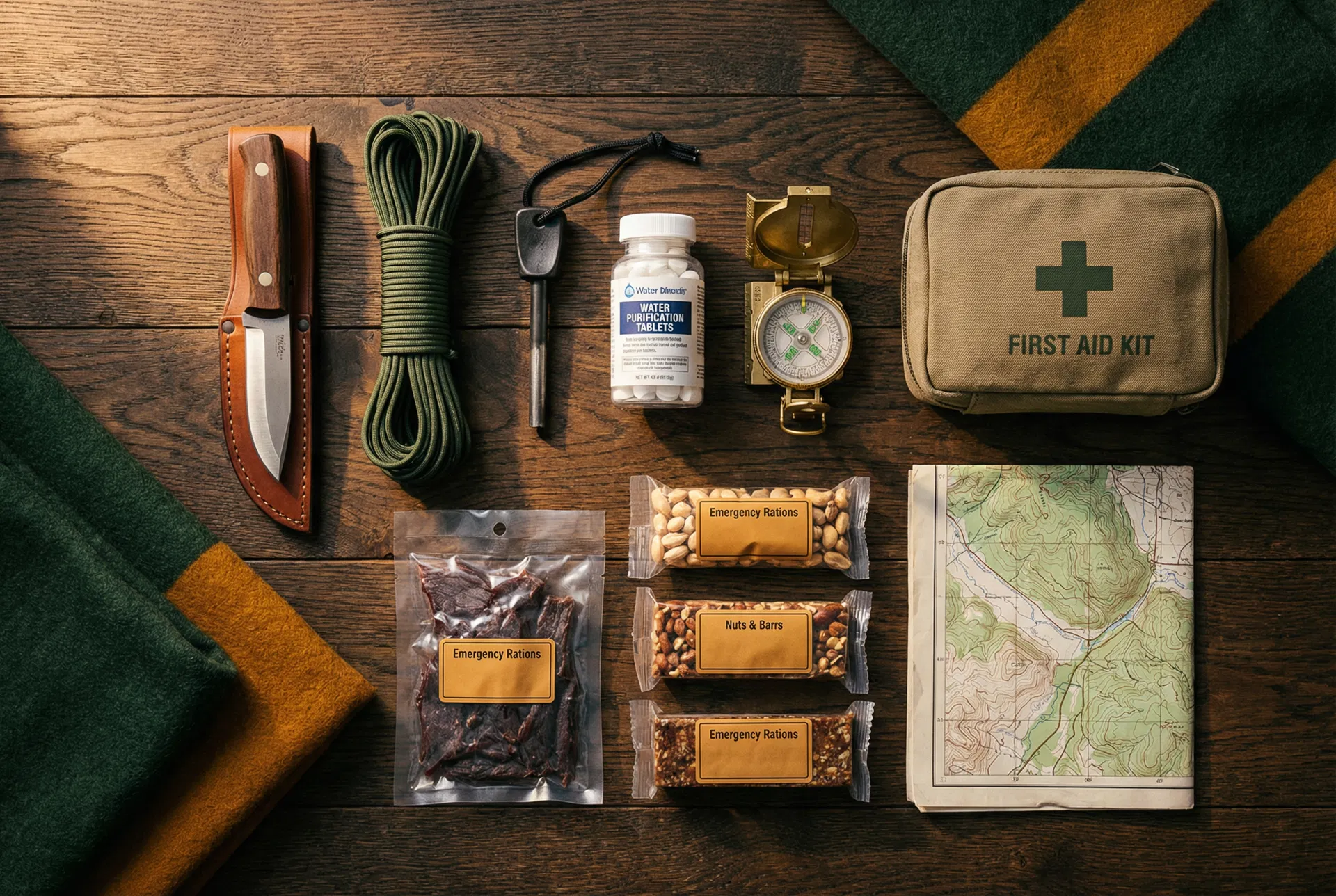
Forget the YouTube lists full of gadgets you'll never use. This is the bag I've actually tested, carried, and refined over five years of preparedness.
The Purpose of a Bug-Out Bag
A bug-out bag (BOB) is a pre-packed bag that lets you leave your home quickly with everything you need to survive for 72 hours. The 72-hour timeframe is based on FEMA's guidance that emergency services typically restore order within three days of a major disaster.
The key word is "quickly." If you're spending 30 minutes packing when you need to leave, you've already failed. The bag should be ready to grab and go.
The Bag Itself
Weight is your enemy. A loaded bug-out bag should weigh no more than 20-25% of your body weight — for most people, that's 30-40 pounds maximum. Exceed that and you'll be exhausted before you reach safety.
My recommendation: 5.11 RUSH 72 or similar quality tactical pack. Features to look for: padded hip belt (transfers weight to your hips), MOLLE webbing for attachments, multiple compartments for organization, durable construction.
The Contents: What I Actually Carry
Water (The Non-Negotiable)
- 2 liters of water in a stainless steel bottle (doubles as a cooking vessel)
- Sawyer Squeeze water filter (filters 100,000 gallons, 2 oz)
- 10 water purification tablets (backup)
- Collapsible water container (2L, for carrying extra water when available)
Food (72 Hours of Calories)
- 6 Mountain House freeze-dried meals (2,000 cal/day)
- High-calorie energy bars (Clif, Larabar) — 6 bars
- Instant coffee packets (morale matters)
Shelter and Warmth
- Emergency bivy (SOL Escape Bivvy) — 3.5 oz, reflects 90% of body heat
- Tarp (8x10 silnylon) — shelter, ground cloth, rain collection
- 50 feet of paracord
- Wool buff/neck gaiter
Fire
- BIC lighter (2)
- Ferro rod and striker
- Waterproof matches in a sealed container
- Tinder (fatwood sticks, 6)
Navigation
- Topographic map of your region (laminated)
- Baseplate compass (Silva Ranger or similar)
- Know how to use both before you need them
First Aid
- Tourniquet (CAT or SOFTT-W — not the cheap ones)
- Israeli bandage (pressure dressing)
- Chest seals (2)
- Hemostatic gauze (QuikClot or Celox)
- SAM splint
- Blister treatment
- Basic medications: ibuprofen, antihistamine, antidiarrheal, antacid
Tools
- Fixed-blade knife (Mora Companion or similar — $15, excellent quality)
- Multi-tool (Leatherman Wave)
- Headlamp (Black Diamond Spot) + extra batteries
- Duct tape (small roll)
Communication and Power
- Hand-crank/solar emergency radio (Midland ER310)
- Fully charged power bank (20,000 mAh)
- Copies of important documents (waterproof bag)
- Cash ($200 in small bills)
What I Left Out (And Why)
Guns: A topic for another article. If you carry, carry what you always carry. Don't add a dedicated firearm to the bag — it adds weight and complexity.
Fancy gadgets: GPS units, solar chargers, water purification bottles with built-in filters — all have their place, but they add weight and complexity. Keep it simple.
Too much food: 72 hours is not a long time. You can survive on minimal calories for three days. Don't sacrifice pack weight for food comfort.
The Most Important Prep
The bag is only as useful as your plan. Know where you're going (at least two destinations), know your routes (primary and alternate), and practice the route at least once.
The Real Test: Put on the bag and walk five miles. If you can't do that comfortably, your bag is too heavy or you need to get in better shape. Probably both.
More in Survival & Prep
Food Storage for Beginners: The 3-Month Plan That Actually Works
You don't need a bunker or $5,000 to build a meaningful food supply. Start here, start small, and build systematically.
Emergency Communications: Why Every Prepper Needs a Ham Radio License
When cell towers go down and the internet is out, ham radio operators are still talking. Here's how to get licensed and what gear actually matters.